
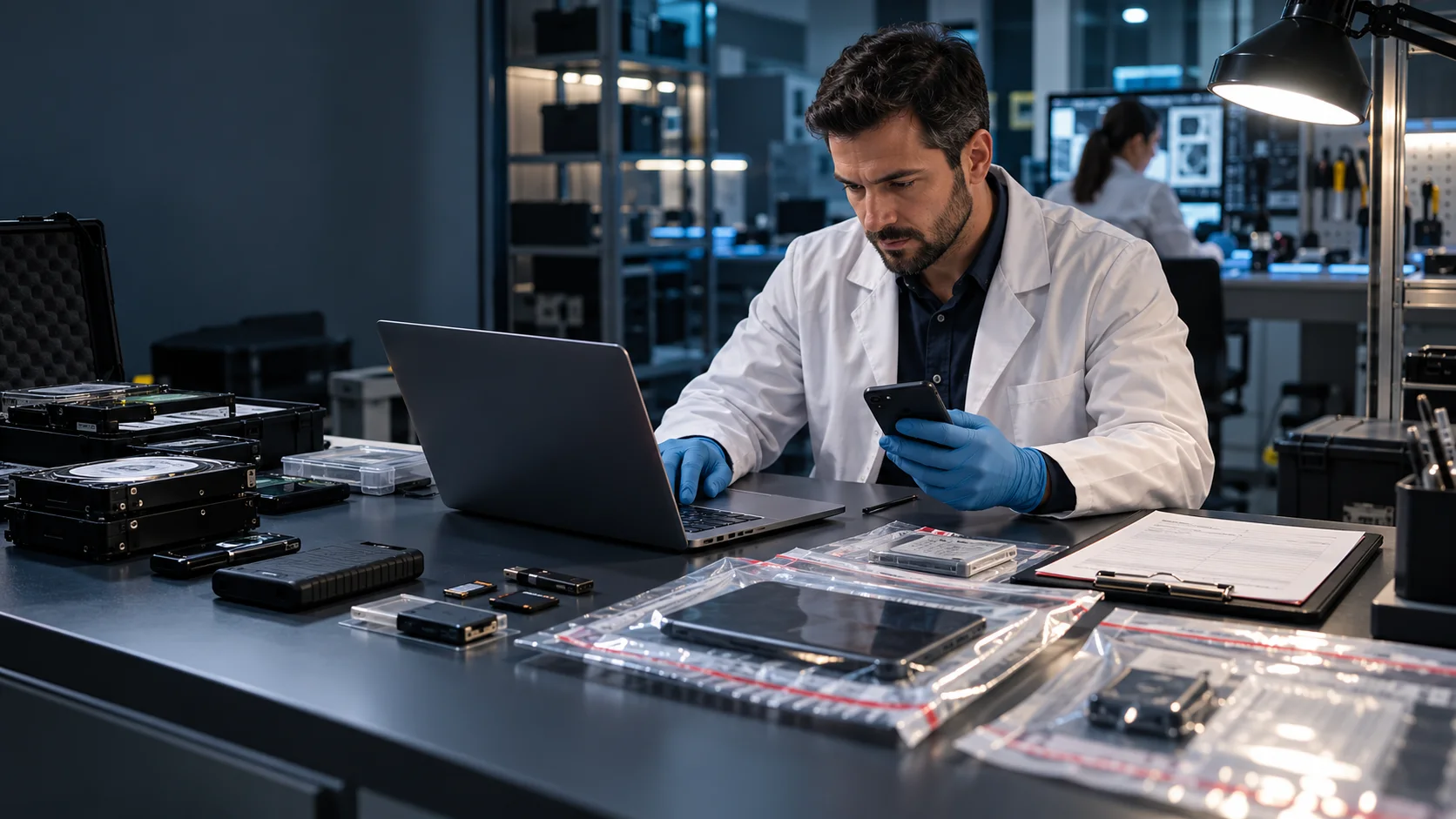
Digital evidence decides a growing share of disputes, from employment claims and contract fights to family law and fraud investigations. But a screenshot, an exported email folder, or a phone handed over in a plastic bag is not automatically usable in court. Whether digital evidence is admitted depends on how it was collected, preserved, and explained.
This article covers what "court-admissible" generally means for digital evidence, why authenticity and integrity matter more than technical sophistication, and the practical steps that improve the odds evidence survives scrutiny. It is general information, not legal advice. Admissibility rules vary by court, by case type, and by jurisdiction, and your attorney is the right person to advise on your specific matter.
What "Court-Admissible" Actually Means
Admissibility is a set of gatekeeping rules. A judge decides whether a piece of evidence may be shown to the jury or considered by the court. Digital evidence usually has to clear several hurdles:
- Relevance. The evidence must tend to prove or disprove a fact that matters in the case.
- Authenticity. Someone must be able to show that the item is what it claims to be — that this file came from that account, that this device belonged to that person, that this message was actually sent.
- Integrity. The evidence should be shown to be complete and unaltered, or any changes should be documented and explained.
- Hearsay and exceptions. Statements made outside court are generally excluded unless an exception applies. Many electronic records fall under business-records or other recognized exceptions, but the analysis is fact-specific.
- Best evidence and original writings. Where the content of a writing matters, courts generally want the original or a reliable duplicate. Digital copies can qualify, but the process of making them matters.
In federal courts and many state courts, rules addressing self-authenticating electronic records and the reliability of computer-generated data have evolved to keep pace with technology. California has its own evidence rules and case law. The common thread is that judges want a credible account of where the data came from and what happened to it afterward.
Why Integrity and Chain of Custody Matter So Much
Physical evidence like a weapon or a document has an obvious history: who found it, who handled it, where it was stored. Digital evidence needs the same story, told in technical terms.
Hashing and verification
A hash is a short digital fingerprint calculated from a file or device. If a single bit changes, the hash changes. Forensic examiners compute hashes at the time of collection and again later to demonstrate that the data has not been altered. This is one of the simplest and most persuasive ways to show integrity.
Chain of custody
Chain of custody is the documented record of who had the evidence, when, and what they did with it. For digital evidence, that includes who imaged a drive, where the image was stored, whether write-blocking was used to prevent changes, and how access was controlled. Gaps or undocumented handling give the other side room to argue the evidence was contaminated or tampered with.
Metadata and context
Files carry metadata: creation and modification times, author fields, geolocation, and more. Metadata can support authenticity, but it can also be misleading. Timestamps may reflect a device's clock settings, files may be copied with altered attributes, and some platforms strip metadata entirely. Examiners treat metadata as one clue among several, not as proof on its own.
Common Ways Digital Evidence Gets Excluded or Undermined
Most problems with digital evidence are avoidable, and most of them happen before anyone talks to a lawyer.
- Opening, scrolling, or "cleaning up" a device. Simply turning on a phone or laptop can change files, logs, and timestamps. Even viewing photos can create new artifacts.
- Screenshots without context. A screenshot shows what appeared on a screen at one moment. It does not show who sent it, whether it was edited, or what surrounded it. Screenshots are often useful leads but weak standalone proof.
- Forwarded or re-saved files. Emails exported through a mail client, photos sent through messaging apps, and documents re-saved multiple times may lose metadata or change format.
- Missing account and device records. Proving that a message came from a particular person often requires account records, login logs, or device data — not just the message itself.
- Undocumented collection. Evidence gathered by an untrained person without notes, hashes, or secure storage is harder to defend, even if it is genuine.
- Over-collection. Copying everything on a device can sweep in privileged communications or unrelated private data, creating legal and ethical problems.
None of these issues automatically makes evidence inadmissible. But each one gives the opposing party a line of attack, and judges weigh reliability when deciding what a jury should see.
Practical Steps to Preserve Digital Evidence
If you think data may become relevant to a dispute, act early and carefully. The following steps are general guidance, not a substitute for advice from your attorney or a forensic professional.
- Stop using the device or account if you can. Avoid deleting, reorganizing, or "tidying" files. Do not factory-reset anything.
- Preserve in place where possible. For cloud accounts and business systems, ask the provider or administrator about retention settings and legal holds before data is overwritten or purged.
- Document what you see. Note dates, times, devices, account names, and how you accessed the information. Keep those notes with the evidence.
- Capture originals, not just screenshots. Where feasible, export native files, save original message formats, and keep the source account or device intact.
- Work with a forensic examiner for devices. A trained examiner can create a verified forensic image using write-blocking and hashing, preserving the original for inspection.
- Maintain a written chain of custody. Record every transfer, storage location, and access. Store copies securely with access controls.
- Coordinate with counsel. Your attorney can advise on legal holds, privilege, privacy obligations, and what must be disclosed to the other side.
Preservation is time-sensitive. Logs rotate, messages auto-delete, devices get replaced, and cloud providers purge data on schedules you do not control. Delay is one of the most common reasons useful evidence is lost.
Where Digital Forensics Fits
Digital forensics is the disciplined process of identifying, preserving, analyzing, and reporting on electronic evidence. A forensic examiner typically:
- Acquires data in a way that preserves integrity, using verified images and hashes
- Analyzes artifacts such as communications, file activity, account access, and deleted data
- Documents methods and findings in a report that can be reviewed by the other side
- Explains technical findings in plain language for attorneys, judges, and juries
Forensic work is not only about finding a smoking gun. It is often about answering narrower, defensible questions: Was this file modified? When was this account accessed? Does this document match the claimed source? Can a deleted message be recovered? A careful examiner will also tell you what the data cannot show, which is just as important.
Our digital forensics practice handles device and account examinations, preservation, and reporting for matters in Los Angeles, Orange County, San Diego, and across Southern California. When a case turns on technical findings, an expert witness may be needed to explain them and withstand cross-examination.
When to Bring In Professional Help
Not every dispute needs a forensic examiner. But certain situations call for one early:
- The evidence is on a device that may be altered, damaged, or wiped
- You need to prove who sent a message or accessed an account
- Data has been deleted and recovery may be possible
- The other side has already retained an expert or challenged authenticity
- The amount at stake or the complexity of the systems involved is significant
- You need a defensible report for litigation, arbitration, or a regulatory matter
Investigative support can also help before litigation begins. A private investigator working with forensic tools can gather facts, interview witnesses, and document findings in a way that supports later legal proceedings. Businesses facing a data incident or insider threat may also need cybersecurity review to understand what happened and what obligations follow.
Frequently Asked Questions
Are screenshots admissible in court?
They can be, but they are often challenged. A screenshot shows what appeared on a screen, not necessarily who created it or whether it was edited. Screenshots are stronger when paired with original files, account records, device data, or testimony explaining how and when they were captured. Courts look at the whole picture, not the screenshot alone.
Does evidence have to be collected by a professional to be admitted?
No. Individuals and businesses can collect and preserve their own records, and courts routinely admit such evidence. However, professional collection with documented methods, hashes, and chain of custody is generally more resistant to challenge, especially when the other side disputes authenticity or integrity.
What is chain of custody for digital evidence?
It is the documented history of who handled the evidence, when, and how. For digital evidence, that includes acquisition methods, storage locations, access controls, and any analysis performed. A clear chain of custody helps show the evidence has not been altered and supports its reliability.
Can deleted files be recovered?
Sometimes. Recovery depends on the device, the file system, how much the device has been used since deletion, and whether data has been overwritten. Recovery is never guaranteed, and attempts should be made on a forensic copy rather than the original device to avoid further changes.
How quickly should I act to preserve digital evidence?
As soon as you believe the data may matter. Logs rotate, messages expire, devices are replaced, and cloud providers purge data on their own schedules. Early preservation, coordinated with your attorney, is usually the single most effective step you can take.
If you are unsure whether your situation calls for forensic preservation, contact us to discuss the facts and timing. General information here is not legal advice, and the right approach depends on your case, your jurisdiction, and the guidance of your attorney.